|
|


Blog
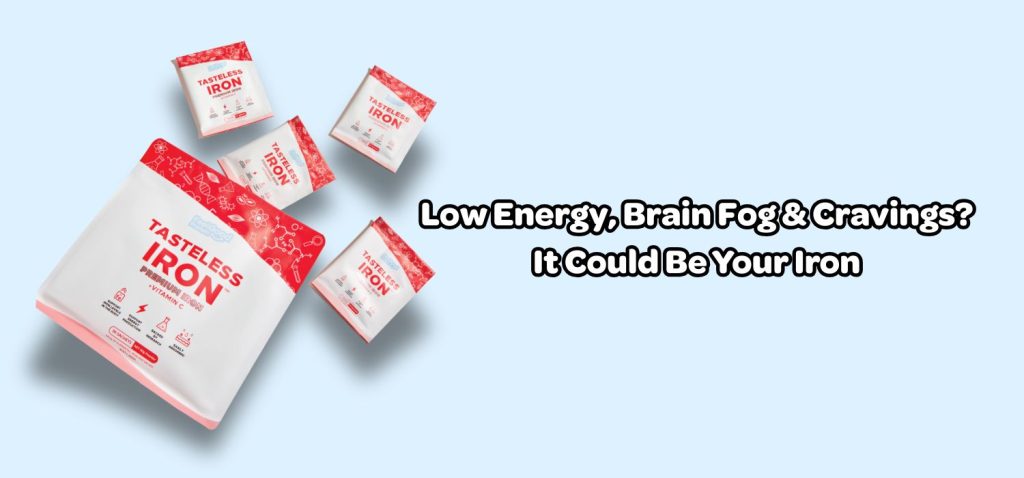
Low Energy, Brain Fog & Cravings? It Could Be Your Iron
Mar
Do you feel tired, even though you had a good night’s sleep? Do you struggle to concentrate? Are your cravings out of control? This all might not be a side effect of just a busy lifestyle. It could be your iron levels letting you down.
Iron deficiency is one of the most common nutrient deficiencies affecting women (Chan, 2025). It can be a little tricky to spot at first, but once you identify it, it’s usually quite manageable with the right support and a few simple changes. Let’s break it down and look at how you can start feeling your best again!
Why Iron Matters
Iron is a nutrient that often gets overlooked, but it’s super important and plays a critical role in keeping your body running smoothly. One of iron’s biggest jobs is helping transport oxygen around your body, which is essential for maintaining healthy energy levels (Accredited Practising Dietitians in Dietitians Australia’s Vegetarian Interest Group, 2025). Iron also supports cognitive function, helps maintain a healthy immune system, and even plays a role in mood regulation. Simply, it’s an all-rounder.
Common Signs of Low Iron
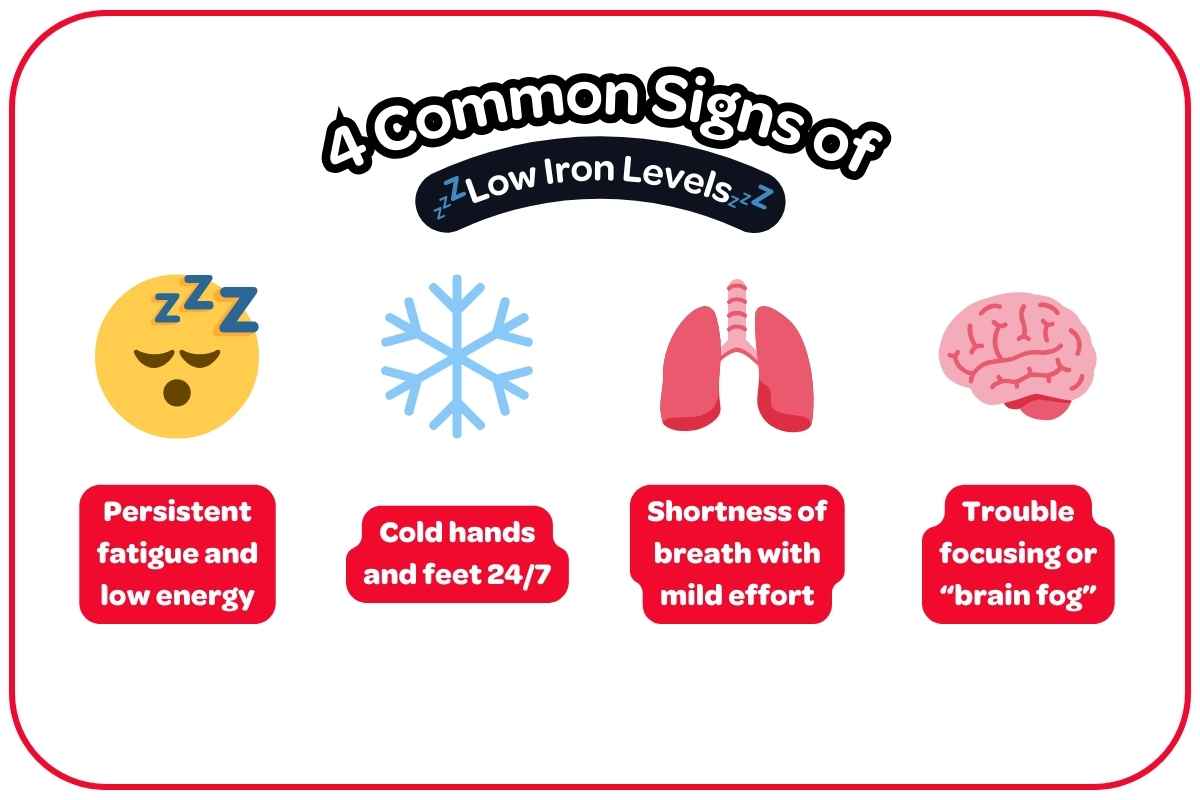
Signs of low iron usually show up in a few different ways (Mayo Clinic Staff, 2025). You might notice things like feeling constantly tired even after a good night’s sleep, brain fog, or having trouble concentrating. Some people also experience dizziness or light headaches. Less common signs can include shortness of breath, looking paler than usual, brittle nails, and often feeling cold. If you’re noticing a few of these symptoms together, it could be worth looking into your iron levels.
How To Improve Your Iron Levels
First and foremost – get tested! It’s really important to see a health professional and get a blood test before making any changes. This helps you understand exactly what’s happening in your body so you can make informed choices from there.
If iron levels are low, then it’s time to take action. A lot of people forget that you can often get all the crucial dietary nutrients your body needs through a varied, balanced diet. Your first step should be focusing on increasing iron-rich foods in your meals (Cleveland Clinic, 2023). Try including foods like red meat, sardines, spinach, lentils, chickpeas, and tofu.
Making a conscious effort to increase your iron intake through food is a great starting point, then see how your energy levels and overall lifestyle feel over time. Small, consistent changes can really make a difference!
Supporting Your Iron Levels
If increasing iron-rich foods in your diet just isn’t quite enough, it might be time to consider supplementation. But with so many options on the market, it can feel a bit overwhelming. So how do you know which iron supplement is right for you?
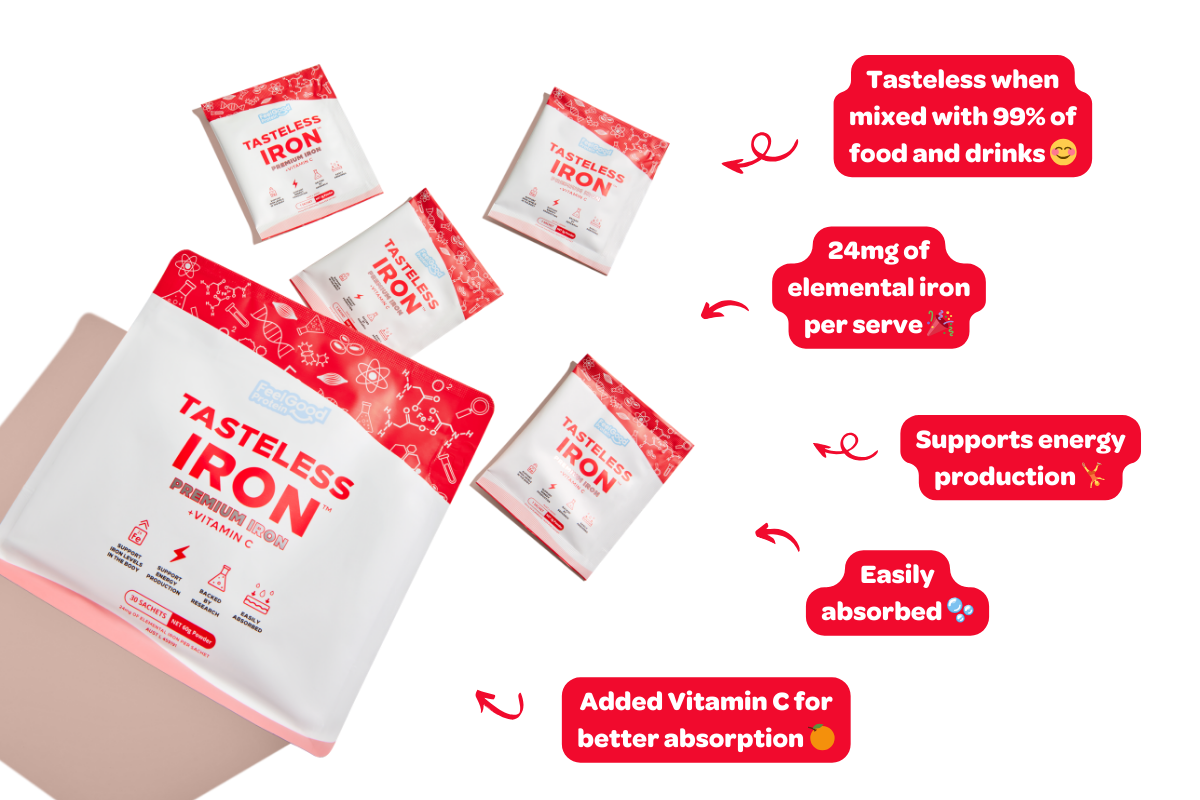
The main thing to look for is how well the iron can be absorbed by your body, so you’re actually getting the most benefit from your supplement. It can also be helpful to choose an iron supplement that includes Vitamin C, as Vitamin C can help support iron absorption and improve how effectively your body uses the iron you’re taking (Cleveland Clinic, 2023).
Tasteless Iron by Feel Good Protein
One of the biggest challenges people face when taking supplements is simply remembering to take them! That’s why making your supplements easy to fit into your daily routine is so important. Tasteless Iron by Feel Good Protein was designed with this in mind, helping make iron supplementation easier, quicker, and more enjoyable.
Tasteless Iron is completely tasteless when mixed into 99% of foods and drinks, and it won’t change the texture either. This means you can easily add it to your favourite smoothies, snacks, meals or beverages throughout the day without even noticing it’s there, while still supporting your iron intake.
When Will You Feel Better?
Like most good things, supplements aren’t an overnight fix, but stick with it! When you take your iron supplement daily as part of your routine, you may start noticing improvements within a few weeks. Everyone’s body is different, so for some people it might take a little longer, and that’s totally normal.
The real magic is consistency. Taking your supplement every day helps give your body the best chance to support healthy iron levels and keep you feeling your best. Don’t forget to check in with regular follow-up blood tests too, just to make sure your levels are improving safely and effectively.
References
Accredited Practising Dietitians in Dietitians Australia’s Vegetarian Interest Group. (2025, October 03). Dietary iron makes healthy bodies. Retrieved from dietitiansaustralia.org.au: https://dietitiansaustralia.org.au/health-advice/dietary-iron-makes-healthy-bodies
Chan, D. L.-A. (2025, February 20). Iron Deficiency: Why Metal Matters. Retrieved from tpcjc.com.au: https://tpcjc.com.au/iron-deficiency-why-metal-matters/
Cleveland Clinic. (2023, March 15). 52 Foods High in Iron. Retrieved from health.clevelandclinic.org: https://health.clevelandclinic.org/how-to-add-more-iron-to-your-diet
Cleveland Clinic. (2023, December 08). Should You Take Iron With Vitamin C? Retrieved from health.clevelandclinic.org: https://health.clevelandclinic.org/iron-and-vitamin-c
Mayo Clinic Staff. (2025, September 20). Iron deficiency anemia. Retrieved from www.mayoclinic.org: https://www.mayoclinic.org/diseases-conditions/iron-deficiency-anemia/symptoms-causes/syc-20355034