|
|


Blog
Understanding Iron Supplements: What You Need to Know
Apr
Iron is one of those quiet overachievers in your body – it helps carry oxygen around, supports your energy levels, and basically helps you to function like a normal human (not a permanently tired zombie) (Dietitians Australia, 2025). Most people get enough iron from a balanced diet, but sometimes your body needs a little extra backup. That’s where iron supplementation can be considered. Think of them as your body’s support crew when levels are running low.
Before we dive in, it’s important to remember that everyone’s nutritional needs are different. This blog is for general information only and isn’t a substitute for personalised advice from a qualified health professional.
Why Iron Matters
Iron plays a pretty important role behind the scenes. It helps your body make haemoglobin, the protein in red blood cells that carries oxygen around your body (National Health and Medical Research Council, 2022). Basically, it’s what helps keep your energy levels from feeling like they’re running on 1%.
You’ll find iron in foods like red meat, poultry, seafood, legumes, leafy greens, and fortified cereals. There are plenty of options to mix and match (Nutrition Australia, n.d.). That said, not everyone finds it easy to hit their iron needs through food alone. Things like your diet, life stage, and how well your body absorbs iron can all make a difference (National Health and Medical Research Council, 2022).
How to Support Healthy Iron Levels
If you’re looking for ways to increase your iron levels, here are a few everyday habits that could help:
- Mix up your meals with iron-rich foods
- Pair plant-based iron with vitamin C (Queensland Health, 2013)
- Skip the tea or coffee at mealtimes (Queensland Health, 2013)
When Iron Supplements May Be Considered
Iron supplements are pretty common in Australia, but they’re definitely not a one-size-fits-all situation. A healthcare professional may suggest them if tests show your iron levels are running low and your body needs a little extra support.
Because iron needs vary from person to person, it’s important not to start supplementation without guidance. Everyone’s iron needs are different, and taking it when you don’t actually need it can lead to some not-so-fun side effects.
Tips To Find the Right Iron Supplement for You
Finding the right iron supplement doesn’t have to be complicated. Here are a few simple things to keep in mind:
✅ Start by checking the type of iron used, as different forms of iron may be absorbed more easily
✅ Look for something gentle on your stomach to avoid any discomfort
✅ Convenience matters, so choose an option that fits easily into your routine
✅ Make sure it suits your lifestyle and daily habits
✅ Bonus points if it includes vitamin C to help with absorption
✅ And most importantly, pick something easy to take – especially if large tablets aren’t your thing
The Bottom Line
Iron is essential for normal body function. If your dietary intake is insufficient, supplementation may be considered with guidance from a healthcare professional.
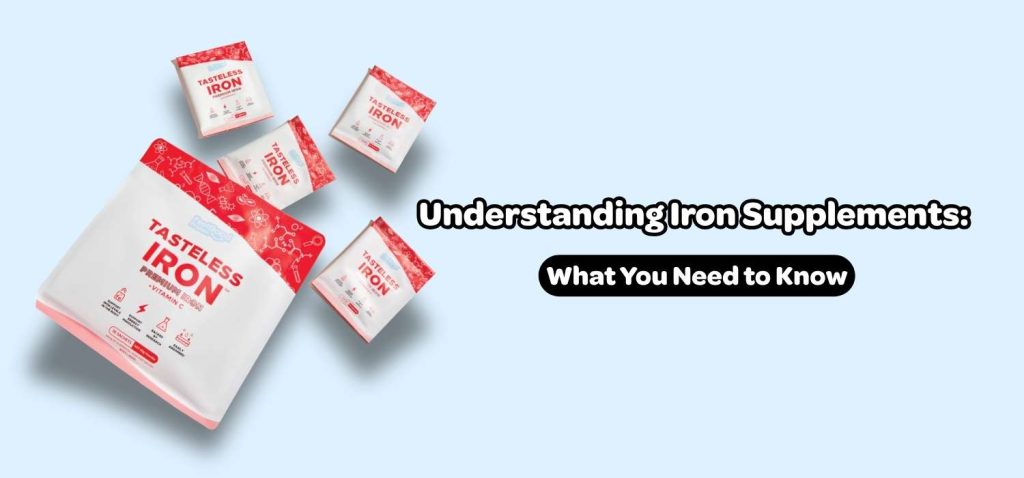
Explore our range of iron supplements here.
References
Dietitians Australia. (2025, October 3). Dietary iron makes healthy bodies. Retrieved from dietitiansaustralia.org.au: https://dietitiansaustralia.org.au/health-advice/dietary-iron-makes-healthy-bodies
National Health and Medical Research Council. (2022). Iron (Nutrient Reference Values).
https://www.eatforhealth.gov.au/sites/default/files/2022-04/n35-iron_0.pdf
Nutrition Australia. (n.d.). Iron. Retrieved from nutritionaustralia.org: https://nutritionaustralia.org/resources/iron/
Queensland Health 2013, Iron deficiency and anaemia, Queensland Government, viewed 17 April 2026, https://www.health.qld.gov.au/__data/assets/pdf_file/0032/147974/general_iron.pdf